
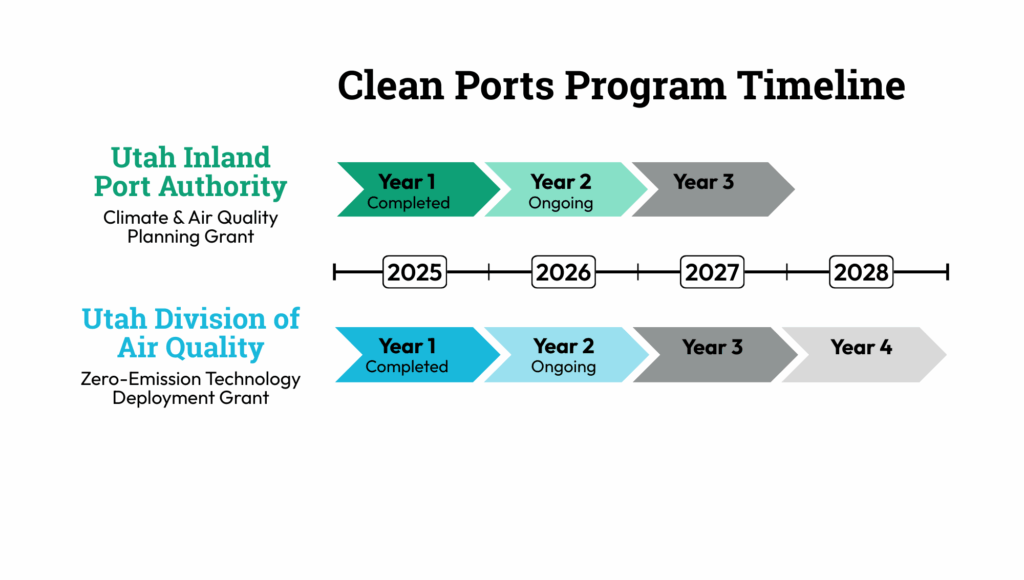
As the Clean Ports Program enters its second year, the Utah Inland Port Authority (UIPA) and Utah Division of Air Quality (DAQ) will be working towards key milestones across all program areas. Read on for the team’s 2026 goals as they work to improve air quality, advance workforce development, and support sustainable supply chains in Utah.
Utah Inland Port Authority (UIPA)
“After a productive 2025 laying the groundwork for our program activities, UIPA’s Clean Ports team is excited to hit the ground running in 2026,” said Mona Smith, UIPA’s Environmental and Sustainability Director and Clean Ports Project Manager. “We will begin key work with contractors on our Baseline Emissions Inventory and Workforce Impact Analysis, as well as support electrical grid planning efforts. We’ll also continue to engage local communities at every step of the way, including by kicking off regular meetings with the Near-Port Community Steering Committee.”
Baseline Emissions Inventory
In November 2025, UIPA published a Request for Proposals (RFP) to identify a contractor to support a Baseline Emissions Inventory at the Salt Lake City Intermodal Terminal (SLCIT). The UIPA team aims to select a firm to perform these services in early 2026. UIPA and the contractor will then finalize the EPA Quality Assurance Project Plan to ensure emissions inventory accuracy before building out the inventory in spring 2026. This inventory, which measures SLCIT emissions prior to any emissions reduction efforts, will be crucial for tracking progress as diesel equipment is electrified over the next few years.
Workforce Impact Analysis
In December 2025, UIPA published an RFP to identify a contractor to support a Workforce Impact Analysis to assess the benefits and impacts the SLCIT workforce may face as equipment is electrified. The analysis will also explore how to best support local communities in accessing any future electrification-related jobs at the terminal. In early 2026, UIPA will select the firm to support these services and begin the analysis.

Community Engagement
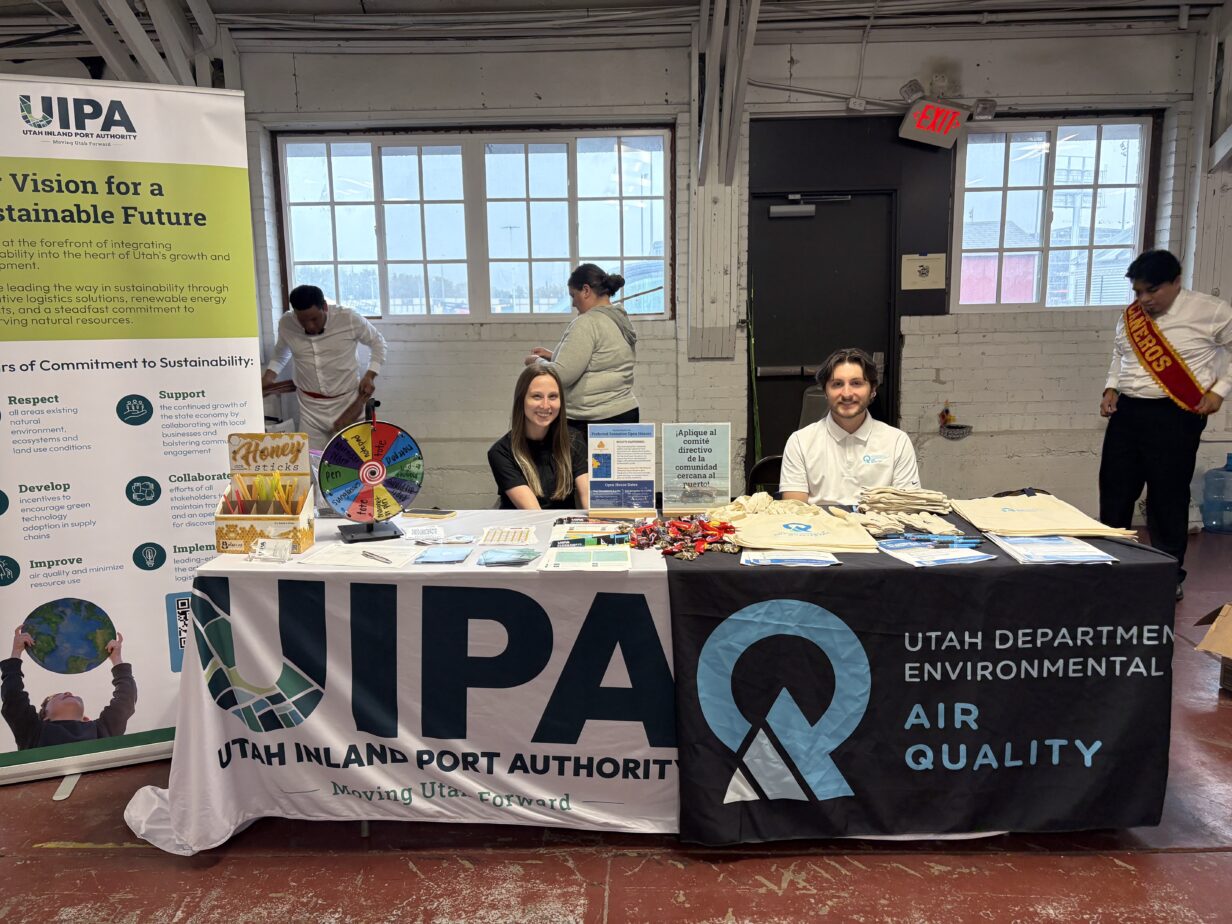
In summer and fall 2025, the Clean Ports team attended local events, met with community stakeholders, and welcomed applications for the Near-Port Community Steering Committee. The Steering Committee will be finalized in early 2026 and meet throughout the year, with the inaugural meeting held in early spring 2026. Additionally, UIPA will continue to attend community events to share Clean Ports updates, as well as contribute to youth engagement activities in collaboration with the Utah Clean Air Partnership (UCAIR). Current program activities and opportunities will be shared through the Clean Ports newsletter and website.
Electrical Grid Planning
In 2026, UIPA plans to work closely with PacifiCorp (the parent company of Rocky Mountain Power) to plan for anticipated increases in electricity demand at the SLCIT as equipment is electrified. This will include evaluating the SLCIT’s readiness for electric vehicle charging infrastructure and studying how to integrate this planned infrastructure into the region’s power ecosystem.
Utah Division of Air Quality (DAQ)
2026 promises to be a busy year for DAQ’s Zero-Emission (ZE) Technology Deployment (ZETD) team, as they roll out equipment incentive programs and prepare for equipment electrification.
Electrical Grid Planning
Like UIPA, DAQ will make progress on electrical grid planning activities in 2026, continuing its collaboration with PacifiCorp to establish electrical infrastructure needs for the ZE technology planned for the SLCIT.
Equipment Incentive Programs
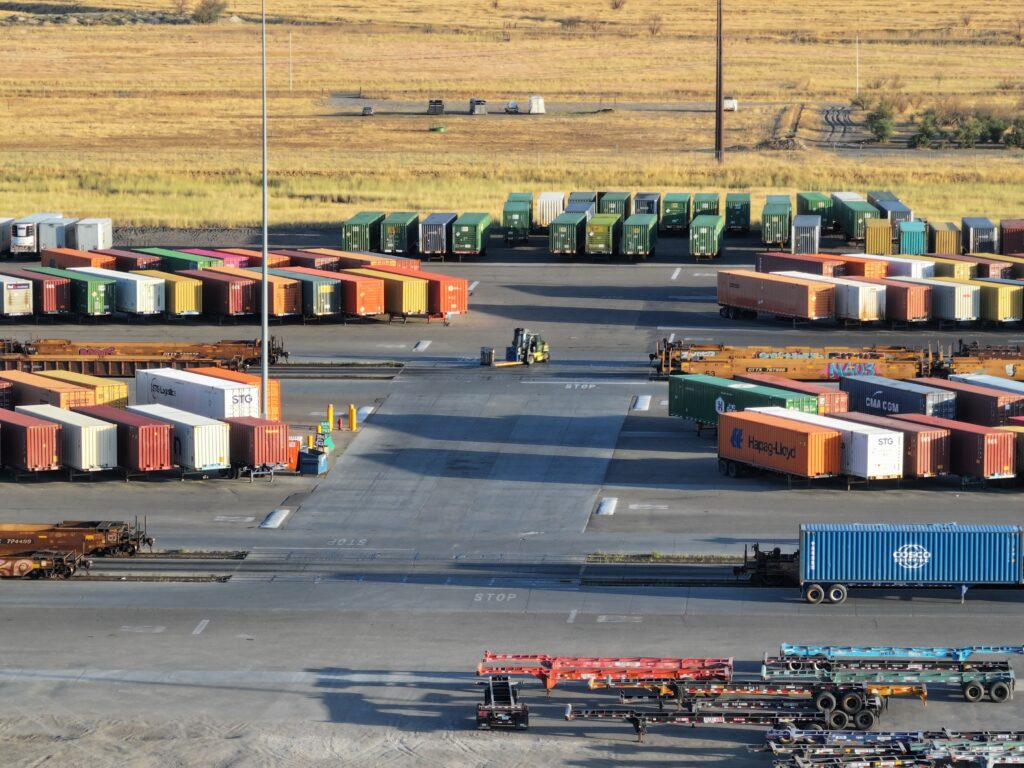
In 2025, DAQ began work with Union Pacific Railroad (UP), the owner and manager of the SLCIT, to identify the first phase of ZE technology cargo-handling equipment to be eligible for incentives through the ZETD program. In 2026, DAQ will continue collaboration with UP and launch the first phase of incentive applications for Drayage Trucks. “This program is especially exciting because it will cover 75 to 90 percent of the cost of a new electric drayage truck for qualified operators,” explained Amariah Gibbs, DAQ’s Clean Ports Program Manager. “This is the highest incentive DAQ has ever been able to offer for electrification.”
Who Qualifies?
To be eligible for Clean Ports funding, your equipment/vehicle must currently operate at the SLCIT. However, DAQ’s Utah Clean Fleet Program has significant funding available for a wide variety of vehicle types beyond trucks.
Funding Breakdown:
- 75% Reimbursement: For the purchase of new ZE equipment/vehicles at the SLCIT.
- 90% Reimbursement: For the purchase of new ZE equipment/vehicles at the SLCIT when an equivalent internal combustion unit is scrapped.
Stay Up to Date
- Sign up for the DAQ Clean Fleet and Air Quality Incentives email list to receive updates when incentive applications go live.
- Sign up for UIPA’s Clean Ports bimonthly newsletter to receive updates on program progress and engagement opportunities.
Author: Caroline Mackleby
Published: 12/18/25